Your child can read. They learned the letters, they sounded out the words, they passed the reading tests. But when you hand them a book, they would rather do literally anything else — play a game, watch a show, stare at the ceiling, negotiate for more screen time.
This is one of the most common frustrations parents face. You know reading is important. You have heard the statistics about vocabulary development, academic performance, and lifelong learning. But knowing reading is good for your child and getting your child to actually enjoy it are two entirely different challenges.
Here is the truth that most reading guides skip: children do not resist reading because they dislike stories. They resist reading because the way reading is presented to them does not feel engaging, personal, or fun. The stories are not about them. The format feels like homework. The experience lacks the interactivity and visual richness they get from every other form of entertainment.
The solution is not to force more reading time. It is to change what reading looks and feels like.
In this guide, you will find 12 practical strategies to make reading fun for kids — not by tricking them into it, but by genuinely transforming the experience into something they look forward to.
Why Kids Lose Interest in Reading
Before we get to the solutions, it helps to understand what is actually going on when a child says "reading is boring."
The content does not feel personal. A generic story about characters they have no connection to cannot compete with a game that puts them at the center of the action. Children are wired for stories that feel relevant to their lives, their interests, and their identity.
Reading feels passive. Compared to games, apps, and videos — all of which require active participation — a traditional book asks a child to sit still and consume. For many children, especially active or creative ones, this feels like being asked to do nothing.
The visual experience is limited. Children today are growing up with rich, dynamic visual media from birth. A page of text — even with occasional illustrations — can feel sparse and understimulating by comparison. This is not a failure of imagination; it is a difference in what their brains have been trained to expect.
Reading is associated with obligation. If a child's primary reading experiences are school assignments and "required reading," the activity itself becomes coded as work. Undoing that association takes intentional effort.
They have not found their book yet. Many children who "hate reading" simply have not encountered a story that speaks directly to them. The right book — the one that makes a child forget they are reading — can change everything overnight.
The strategies below address each of these barriers directly.
Strategy 1: Put Your Child in the Story
The single most powerful way to make reading engaging for a child is to make the story about them.
When a child sees their own name on the page, their own interests reflected in the plot, and a character who looks like them in the illustrations, the reading experience transforms from "consuming someone else's story" to "experiencing my own adventure."
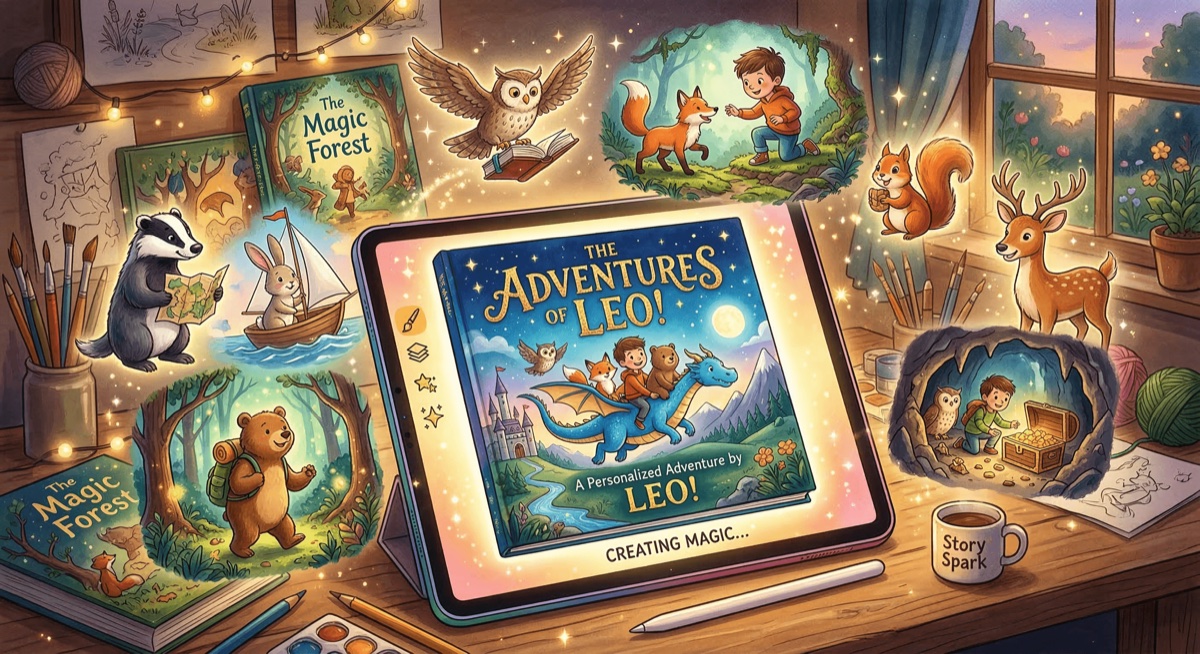
This is not a new insight — personalized children's books have existed for decades. What is new is the technology that makes deep personalization instant and accessible. With AI story generators, you can create a fully illustrated storybook starring your child, featuring their friends, set in their neighborhood, and built around their current obsession — in minutes.
How to do it:
- Use your child's name as the main character's name
- Include their specific interests (if they love space, set the story on a space station; if they love animals, make them a veterinarian)
- Reference real places and people they know
- Let them choose what happens in the story
With StoryPix, you can type a personalized prompt like "A story about [child's name] who discovers a secret treehouse in their backyard where friendly animals come to read books together" and get a complete illustrated story in about two minutes.
The difference in engagement is dramatic. A child who pushes away a generic picture book will pull a personalized story out of your hands and read it again and again.
💡 Let your child watch you create their personalized story. When they see their name being typed in and their interests becoming part of the plot, the anticipation alone makes them eager to read the result. The creation process becomes part of the fun.
Strategy 2: Make Reading a Multi-Sensory Experience
Reading does not have to mean sitting silently with a book. For many children — especially younger ones and kinesthetic learners — adding sensory elements to reading time transforms the experience.
Act it out. Assign characters to family members and read the dialogue in different voices. Let your child act out what the character does — jump when the character jumps, whisper when the character whispers, stomp when the giant walks.
Add sound effects. Knock on the table when someone knocks on a door. Whoosh when the wind blows. Make animal sounds together. Children love this, and it keeps them actively engaged with the story rather than passively listening.
Create a reading environment. Build a blanket fort and read inside it. Use a flashlight for "reading by torchlight." Lay out a picnic blanket in the backyard for summer reading. The context around reading shapes how the child feels about the activity itself.
Pair stories with real-world activities. If you read a story about baking, bake cookies together afterward. If the story features a garden, plant seeds together. The story becomes the beginning of an experience, not the whole experience.
These approaches work because they reframe reading from "sit still and listen" to "participate and explore." The book is a starting point, not the destination.
Strategy 3: Follow Their Obsession, Not Your Curriculum
Every child has an obsession. Dinosaurs. Horses. Minecraft. Space. Robots. Fairies. Whatever it is right now — lean into it completely.
Parents sometimes resist this instinct. They worry that reading only about dinosaurs is not "well-rounded." They try to steer their child toward "better" books or "more literary" stories. This is well-intentioned but counterproductive.
A child who devours fifteen books about dinosaurs is building reading stamina, expanding vocabulary, developing comprehension skills, and — critically — forming a positive emotional association with reading. All of those benefits transfer to other topics later. But they only happen if the child wants to read in the first place.
How to apply this:
- Ask your child what they are most excited about right now
- Find or create stories that feature that exact topic
- Do not worry about variety — depth in one area builds the skills for breadth later
- When the obsession changes (and it will), follow the new one just as enthusiastically
AI story generators are particularly useful here because they can produce stories about literally any topic. If your child is obsessed with deep-sea creatures this month, you can create a new illustrated story about octopuses, anglerfish, or submarine adventures every single night. No bookstore in the world can match that specificity.
Strategy 4: Give Them the Power to Choose
Children who have no say in what they read are children who feel reading is something done to them, not something they do. Choice is one of the most underrated factors in reading motivation.
Let them choose the book. At the library, resist the urge to steer. Let your child browse, pick up books, put them back, and choose what genuinely interests them — even if it is "too easy," "too silly," or not what you would have selected.
Let them choose when to stop. Forcing a child to finish a book they dislike teaches them that reading is an obligation. Letting them abandon a book and pick a new one teaches them that reading is about finding what you love.
Let them choose the format. Some children prefer graphic novels, comics, audiobooks, or illustrated stories over traditional chapter books. All of these count as reading. A child who reads graphic novels voraciously is a reader. Full stop.
Let them choose story elements. When creating stories together or using an AI story generator, let your child decide the character's name, the setting, the problem, and how it ends. The more ownership they have, the more invested they become.
ℹ️ Research consistently shows that autonomy is one of the strongest predictors of intrinsic reading motivation in children. A child who chooses to read a "simple" comic book is building a stronger reading habit than a child who is forced through a "quality" chapter book they hate.
Strategy 5: Read Together — Even When They Can Read Alone
One of the biggest mistakes parents make is stopping shared reading time once a child can read independently. "They can read now, so they should read on their own" seems logical but misses the point entirely.
Shared reading is not about skill development. It is about connection, modeling, and making reading a social experience rather than a solitary one.
Read aloud together. Take turns reading paragraphs. Do different voices for different characters. Pause and discuss what just happened. This keeps reading interactive and connected, not isolated.
Read the same book in parallel. For older kids, choose a book you will both read at the same time. Discuss it over dinner like a mini book club. Children love being treated as intellectual equals, and having opinions about a shared book makes them feel grown-up and valued.
Listen to audiobooks together. During car rides, before bed, or during quiet time, play an audiobook you can both enjoy. Audiobooks are reading. They build vocabulary, comprehension, and narrative understanding. And they create shared stories to talk about.
Create stories together. Collaborative storytelling — where you take turns adding to the plot — is one of the most engaging reading-adjacent activities for children of any age. You can do this verbally, in writing, or by using tools like StoryPix to generate stories from your child's ideas and then reading them together.
Strategy 6: Use Illustrated and Visual Stories
For children who struggle with text-heavy books, illustrated stories are not a step down — they are a bridge up.
The brain processes images faster than text. For developing readers, illustrations provide context clues that make the text more accessible. For reluctant readers, the visual element makes the page feel less intimidating and more inviting.
Picture books are not just for babies. Many sophisticated picture books are designed for children up to age 10 and beyond. The illustrations carry emotional weight and narrative complexity that complements the text.
Graphic novels are legitimate literature. Series like Dog Man, Amulet, Hilo, and Wings of Fire (graphic novel adaptations) have turned millions of reluctant readers into avid ones. The combination of visual storytelling and accessible text makes reading feel more like watching a movie — in the best possible way.
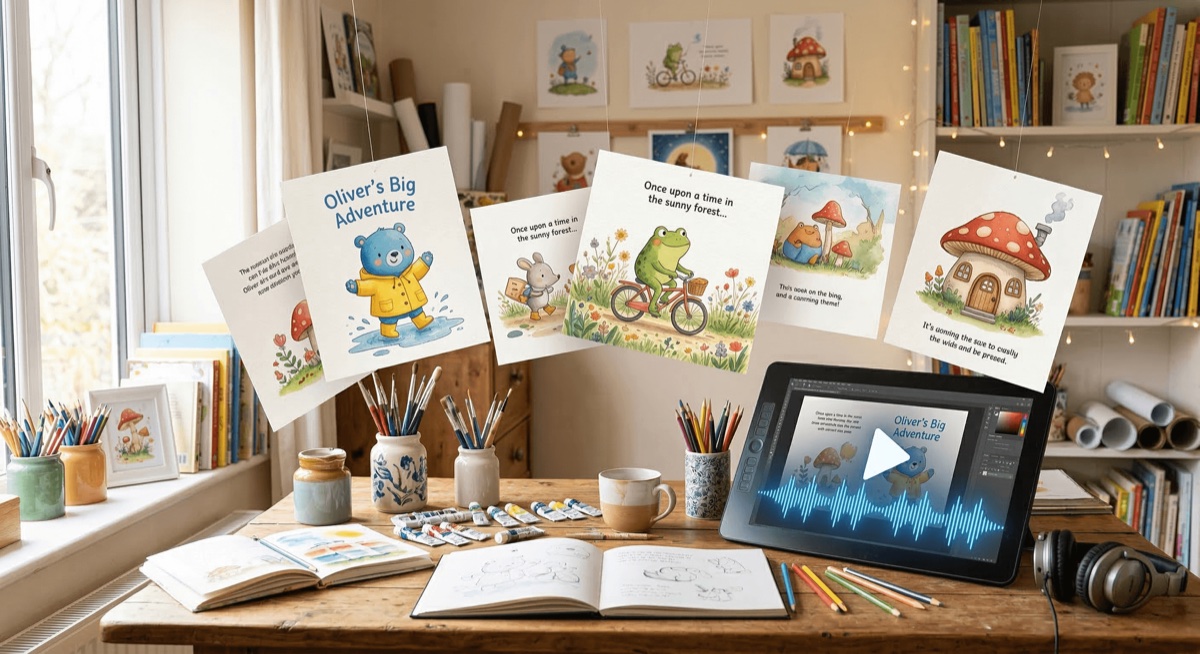
AI-illustrated stories add personalization. An illustrated story that features your child's name and interests is more compelling than any off-the-shelf picture book. When the pictures show a character who looks and acts like them, having an adventure they helped design, the visual element becomes personally meaningful rather than generic.
For a detailed comparison of the best tools for creating illustrated stories, the AI story generator with pictures guide covers what is available.
Strategy 7: Create a Reading Ritual (Not a Reading Requirement)
"You have to read for 20 minutes" turns reading into a timer-based obligation. "Let's do our story time" turns reading into a beloved family ritual. The difference is enormous.
Make it a habit, not a homework assignment. Bedtime stories, morning reading, after-dinner story time — pick a consistent time that works for your family and protect it. The predictability makes reading feel like a normal, pleasant part of the day rather than an extra task.
Remove the timer. If your child's school requires logged reading minutes, handle that separately. During family reading time, put the clock away. Let reading end naturally — when the chapter finishes, when the child is sleepy, when the story reaches a good pausing point.
Create a special reading space. A cozy corner with pillows, a reading nook, a hammock — any dedicated space that signals "this is where we read" helps the brain switch into reading mode. It does not need to be elaborate. A specific cushion on the couch is enough.
Use the right lighting. Warm, soft light creates a reading atmosphere. Overhead fluorescents do not. This is a small detail that makes a real difference in how the experience feels.
For families looking to build a strong bedtime reading routine specifically, the bedtime story ideas guide has 50 ideas organized by age group.
Strategy 8: Connect Reading to Screen Time (Instead of Competing With It)
Most advice about reading and screen time frames them as opposites: "Less screens, more books." This framing creates a zero-sum battle you will probably lose.
A more effective approach is to make reading part of the digital experience your child already enjoys.
Use reading-related apps. Epic!, Libby, and Kindle Kids all offer digital reading experiences that feel more like using an app than "doing reading." For children who are already comfortable with tablets, this is a natural entry point.
Create stories together using technology. AI story generators like StoryPix let your child be actively involved in creating illustrated stories on a screen. The experience feels like using a creative app — not like homework — but the output is a story they will want to read.
Watch the adaptation, then read the source. Many children's movies and shows are based on books. After watching a movie your child loves, offer them the book it came from. "The book has parts the movie left out" is one of the most effective things you can say to a child.
Let them read on screens. E-readers, tablets, and phones are valid reading devices. A child who reads on a Kindle is still reading. Removing the stigma around screen-based reading opens up a much larger world of accessible content.
💡 The goal is not to eliminate screens. It is to make sure some of the time your child spends on screens involves reading and storytelling. When reading is part of their digital life rather than a replacement for it, the resistance disappears.
Strategy 9: Celebrate the Reading, Not the Level
"You should be reading harder books by now." "That book is too easy for you." "When are you going to move on to chapter books?"
Every one of these well-meaning comments tells a child that their current reading is not good enough. And every one of them chips away at reading motivation.
Celebrate volume over difficulty. A child who reads twenty "easy" books is building a stronger reading habit than a child who struggles through one "appropriate level" book over three weeks.
Never shame a re-read. Children who want to read the same book again are not regressing — they are deepening their understanding and finding comfort in a familiar story. Re-reading is a sign of genuine engagement.
Praise the process, not the product. Instead of "Great job finishing that book," try "I noticed you were really into that story — what was your favorite part?" This shifts the focus from completion to enjoyment.
Display their reading proudly. Create a bookshelf of books they have read. Make a reading poster on the wall. Put their personalized AI-generated storybooks alongside purchased books as part of their library. When reading is visible and valued, it becomes part of the child's identity.
Strategy 10: Let Them Create Their Own Stories
Children who create stories become children who appreciate stories. The act of storytelling — deciding what happens, choosing the words, imagining the scenes — builds the same skills as reading and creates a powerful feedback loop.
Dictate stories together. For younger children who cannot write fluently yet, let them dictate a story while you type or write it down. Then read their story back to them. Hearing their own words read as a "real" story is incredibly empowering.
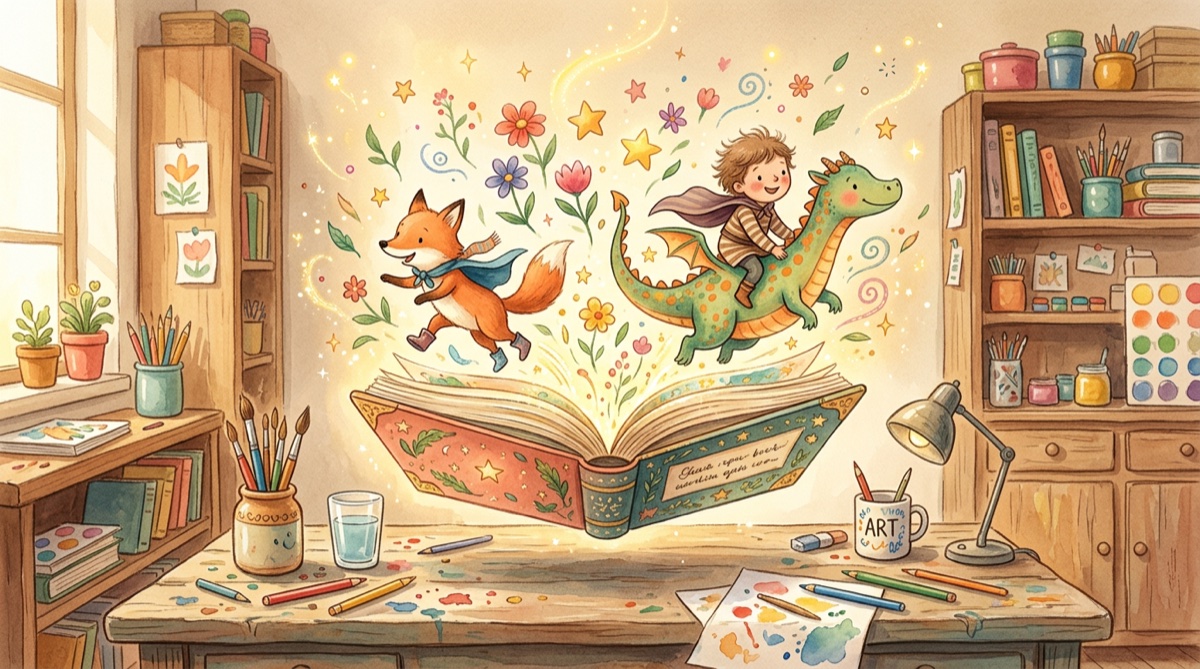
Use an AI story generator as a co-creator. Children can describe their story idea — the characters, the setting, what should happen — and watch an AI tool like StoryPix bring it to life with text and illustrations. This is not passive consumption. It is creative direction. The child is the author; the AI is the illustrator and ghostwriter.
Make homemade books. Fold paper, staple it together, and let your child write and illustrate their own book. It does not need to be good. It needs to be theirs. Put it on the bookshelf next to the "real" books.
Start a family story journal. Keep a notebook where family members add to an ongoing story — one paragraph or page at a time. It becomes a collaborative project that makes everyone a reader and a writer.
For a step-by-step guide on creating personalized children's books, the personalized children's book tutorial walks through the entire process.
Strategy 11: Use Bilingual Stories for Language-Learning Families
For families who speak more than one language — or who want to introduce a second language — bilingual stories are one of the most effective and enjoyable ways to make reading meaningful.
Reading in two languages is not confusing — it is enriching. Research consistently shows that bilingual reading strengthens both languages rather than weakening either one. Children's brains are remarkably capable of processing two language systems simultaneously, especially when the context is engaging and low-pressure.
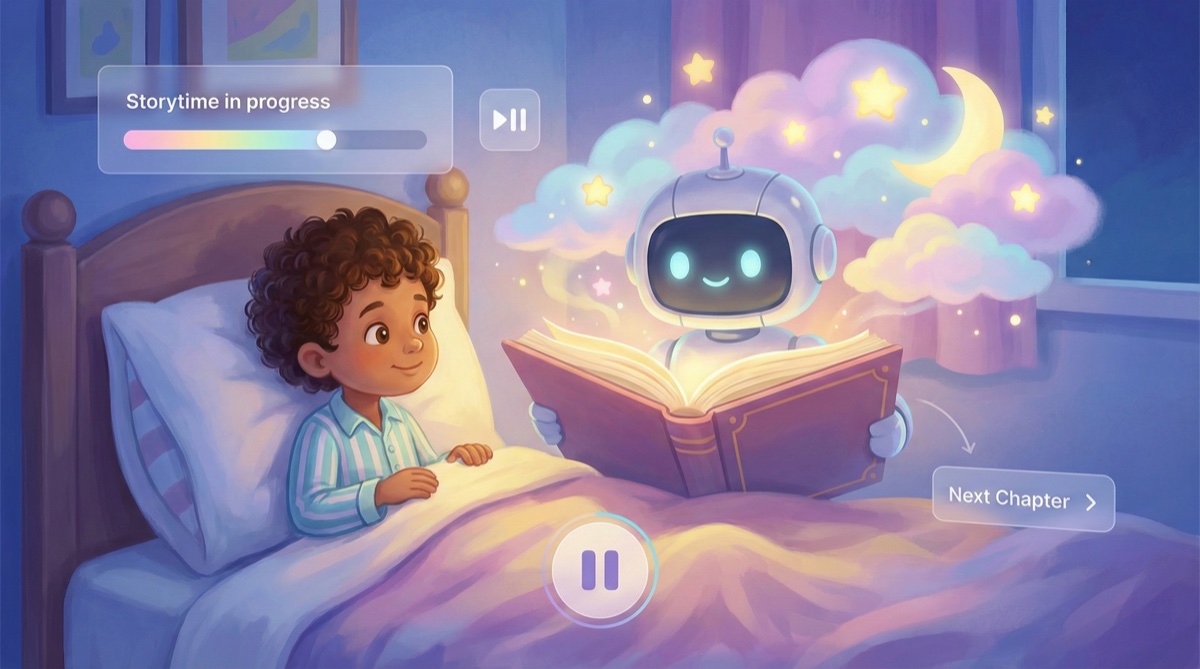
Bedtime is the best time for bilingual reading. When a child is relaxed and drowsy, the brain absorbs language patterns more naturally. A bilingual bedtime story — where text appears in both English and a second language — creates repeated exposure without any pressure to "perform."
Personalized bilingual stories create connection. When a story about your child is told in both your family's heritage language and English, it reinforces the idea that both languages are valuable, important, and part of who they are.
AI tools make bilingual stories easy to create. StoryPix supports bilingual story generation in multiple languages, so you can create illustrated stories that naturally weave two languages together. No translation required on your part.
For a deeper look at the cognitive benefits and practical approaches, the bilingual AI story tools guide covers the research and strategies in detail.
Strategy 12: Model Reading Yourself
This is the strategy that no amount of technology, clever tactics, or creative approaches can replace.
Children who see their parents reading become readers. Children who never see an adult with a book have a much harder time believing that reading is something worth doing.
Read where your child can see you. It does not matter what you read — a novel, a magazine, a news article, a recipe. What matters is that your child regularly sees you choosing to read for your own enjoyment.
Talk about what you are reading. Mention a story you are excited about. Describe a character you like. Share something interesting you learned. This normalizes reading as a topic of conversation, not just an activity.
Visit bookstores and libraries together. Make book-browsing a family activity, not an errand. Let your child see you browsing, choosing, and getting excited about your own finds.
Read their books too. When your child finishes a book, ask to borrow it. Read it yourself and discuss it with them. Being treated as a peer whose taste in books matters is enormously validating for a child.
Making It All Work Together
You do not need to implement all 12 strategies at once. Start with two or three that feel natural for your family and build from there.
Here is a simple starting plan:
Week 1: Put your child in a story (Strategy 1). Create one personalized illustrated story and read it together. Observe their reaction.
Week 2: Add a reading ritual (Strategy 7). Pick a consistent time — bedtime works for most families — and protect it for shared reading.
Week 3: Follow their obsession (Strategy 3). Ask what they are most interested in right now and find or create stories around that topic.
Week 4: Give them choice (Strategy 4). At the library or in an AI story tool, let them drive. Their job is to pick; your job is to read together.
The goal is not to create a "reading program." It is to weave reading into the fabric of your family's life in a way that feels natural, enjoyable, and entirely your own.
Start Making Reading Fun Tonight
Create a personalized, illustrated story starring your child in minutes. When they see themselves in the pages, reading becomes the most exciting part of their day.
Create a Free StoryFrequently Asked Questions
At what age should I start these strategies?
You can start from birth with reading aloud, but the strategies in this guide are designed for children ages 3–12. Personalization (Strategy 1) and multi-sensory reading (Strategy 2) work especially well with younger children, while choice (Strategy 4) and parallel reading (Strategy 5) are more effective with school-age kids.
My child says they hate reading. Is it too late?
It is never too late. A child who "hates reading" has usually just not found the right book, the right format, or the right context. Start with their current obsession (Strategy 3), give them complete choice (Strategy 4), and remove all pressure. Many "non-readers" become voracious readers once the right spark is found.
Are graphic novels and comics really as good as "real" books?
Yes. Graphic novels require the same comprehension skills as prose — readers must follow plot, understand character motivation, interpret dialogue, and make inferences. The visual component adds an additional layer of literacy (visual literacy) that is increasingly important in our world. Graphic novels are real books.
How much should my child be reading each day?
There is no magic number. Consistency matters more than duration. Ten minutes of engaged, enjoyable reading every day builds a stronger habit than thirty minutes of forced reading three times a week. Focus on making reading pleasant, and the duration will naturally increase over time.
Can AI-generated stories replace traditional books?
They are not a replacement — they are a complement. AI-generated personalized stories are uniquely powerful for engagement and motivation because they feature your child directly. Traditional books offer the work of professional authors and illustrators, exposure to diverse perspectives, and the experience of discovering someone else's vision. The best approach uses both.
The Reading Life Starts With Joy
Every avid adult reader can trace their love of reading back to a moment — a specific book, a specific experience, a specific person who made stories feel magical. Your job as a parent is not to make your child read. It is to create those moments.
Make the stories personal. Make the experience fun. Make the choice theirs. And when you see that spark — the first time your child asks for "just one more chapter" — you will know it is working.
Reading is not homework. It is a superpower. And every child deserves to discover it on their own terms.
Create your child's next favorite story — free to start
Related Reading:
- 50 Bedtime Story Ideas Your Kids Will Love — the perfect companion to Strategy 7
- Personalized Books for Kids: Why They Boost Reading — the science behind Strategy 1
- AI Story Generator: The Complete Parent's Guide — the tool behind the strategies
- Best AI Bilingual Story Tools — for multilingual families using Strategy 11