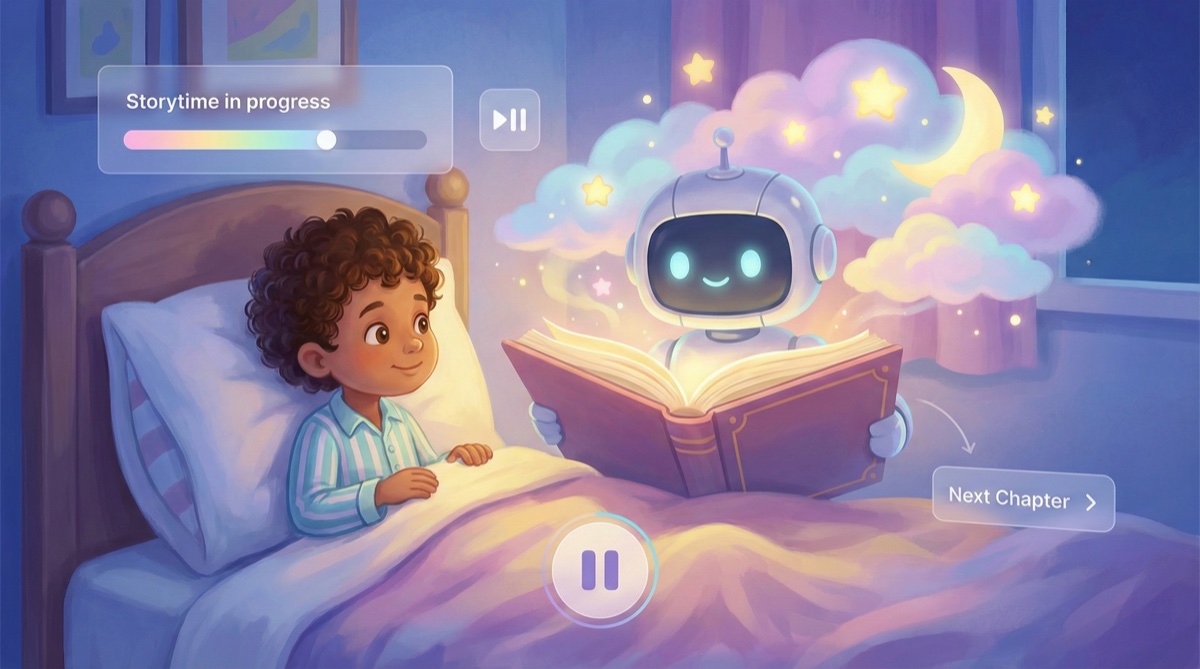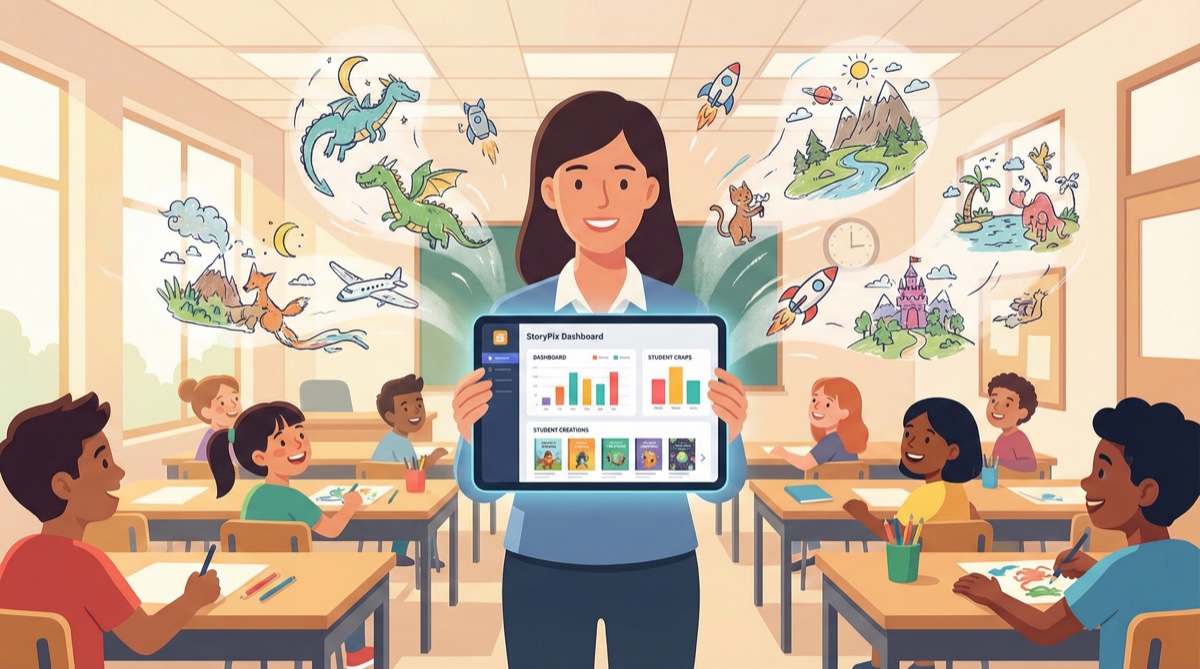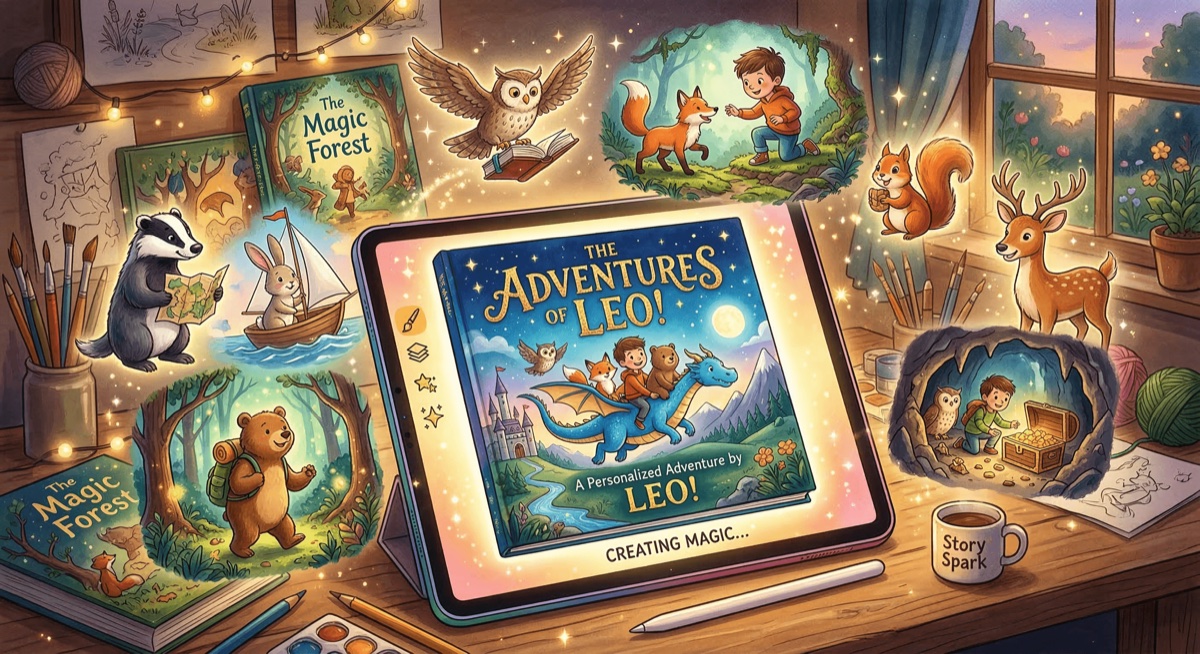
Your child's name is on the cover. Their face — or a character who looks just like them — appears in every illustration. The story is about their favorite animal, set in a place they recognize, and the hero does exactly what your child would do.
This is what a personalized book looks like. And for children, the experience of reading one is fundamentally different from reading any other book on the shelf.
Personalized books for kids are not a novelty or a gimmick. They are one of the most effective tools parents have for building reading engagement, self-confidence, and a genuine love of stories. The research is clear, the results are measurable, and the technology to create them has never been more accessible.
In this guide, you will learn why personalized children's books work so powerfully, what the science says about their impact on reading development, how to create one yourself, and which tools produce the best results.
What Are Personalized Books for Kids?
A personalized children's book is any book where the content is customized to feature a specific child. At minimum, this means the child's name appears in the story. At the deeper end of the spectrum, it includes:
- The child's name and appearance in text and illustrations
- Their specific interests woven into the plot (dinosaurs, space, horses, cooking — whatever they love)
- Real people in their life as characters (siblings, friends, pets, grandparents)
- Familiar settings (their school, their neighborhood, their bedroom)
- Age-appropriate language calibrated to their developmental stage
- Themes that matter to them right now (starting school, making friends, overcoming a fear)
The depth of personalization varies dramatically by tool and approach. A basic personalized book might just swap in a name. A deeply personalized one creates an entirely unique story built around your child's world.
The difference in impact is proportional. The more personal the book, the more powerful the reading experience.
Why Personalized Books Work: The Science
The effectiveness of personalized children's books is not just anecdotal. Multiple research streams explain why customization transforms the reading experience.
The Self-Reference Effect
The self-reference effect is one of the most well-documented phenomena in cognitive psychology. When information is connected to the self — your own name, your own experiences, your own identity — the brain processes it more deeply and retains it more effectively.
In practical terms: a child reading a story about a character named "Alex" will engage at one level. The same child reading a story about a character with their own name engages at a significantly deeper level. Their brain automatically pays more attention, processes the narrative more thoroughly, and remembers it longer.
This is not about ego. It is about how the brain prioritizes information. Self-relevant content triggers stronger activation in the medial prefrontal cortex — the brain region responsible for self-reflection and personal meaning-making. A personalized story is literally more "brain-engaging" than a generic one.
Increased Reading Motivation
A 2019 study published in the Journal of Research in Reading found that children who read personalized stories showed significantly higher reading motivation compared to children who read identical stories with generic character names. The effect was particularly pronounced in children who were previously identified as reluctant readers.
Why? Because the personalized story answered the question every child implicitly asks when presented with a book: "Why should I care?" When the answer is "because this story is about you," the motivation question is resolved instantly.
Stronger Comprehension
When a child is more engaged with a story, they comprehend more of it. This is not surprising, but the degree of the effect is noteworthy. Personalized stories produce better recall of plot events, better understanding of character motivations, and better ability to predict outcomes — all core reading comprehension skills.
The mechanism is straightforward: attention drives comprehension. Personalization drives attention. Therefore, personalization drives comprehension.
Emotional Development
Personalized stories can address emotional challenges in a way that feels safe and relevant. A child who is anxious about starting a new school can read a story about a character with their name starting a new school — facing the same fears, discovering the same that it turns out okay. The story provides a rehearsal for the real experience, with the safety of fiction and the power of personal relevance.
Therapists and educators have used bibliotherapy — using books to address emotional challenges — for decades. Personalized bibliotherapy, where the book's character matches the specific child, is a natural and more powerful extension of this approach.
ℹ️ The research is consistent: personalized content increases engagement, comprehension, and emotional connection in children across all age groups studied. The effect is strongest in children ages 3–8, but meaningful benefits persist through age 12 and beyond.
5 Benefits of Personalized Books Every Parent Should Know
1. They Turn Reluctant Readers Into Eager Ones
This is the benefit parents notice first and care about most. A child who pushes away generic picture books will often grab a personalized book and refuse to put it down. The difference is immediate and visible.
The reason is simple: the book passes the relevance test. A reluctant reader is not necessarily a child who dislikes stories. They are a child who has not found a story worth their attention. A story about them, by definition, is worth their attention.
For strategies on turning reluctant readers around, the how to make reading fun guide covers 12 approaches, with personalization as Strategy 1.
2. They Build Self-Confidence and Identity
Seeing yourself as the hero of a story is a powerful identity-building experience. The child in the book is brave, kind, clever, and capable. When that child shares your name and your face, the narrative becomes a mirror reflecting your best qualities back at you.
For children who struggle with confidence — whether because of a new environment, a learning difference, a social challenge, or just the general uncertainty of growing up — a personalized book that shows them succeeding is more than entertainment. It is affirmation.
3. They Strengthen Family Bonds
A personalized book is often a shared experience. A parent creates it with the child's input, reads it together, and discusses it. The book itself becomes a reference point — "Remember the story where you flew to the moon with your teddy bear?" — that enriches the family's shared narrative.
Unlike purchased books, personalized books carry the intent of creation. Someone made this specifically for your child. That knowledge adds a layer of emotional value that no store-bought book can match.
4. They Support Early Literacy Skills
For pre-readers and early readers, personalized books provide uniquely effective literacy scaffolding:
- Name recognition: Seeing their own name in print repeatedly helps children recognize letter patterns and build sight-word familiarity
- Vocabulary in context: When story vocabulary relates to the child's real life, the words are easier to understand and remember
- Print motivation: The desire to read "their" book drives engagement with the printed word itself
- Narrative understanding: A story about familiar experiences is easier to follow, building comprehension skills that transfer to other books
5. They Make Meaningful Gifts
A personalized children's book is one of the most thoughtful gifts you can give — for birthdays, holidays, milestones, or just because. It communicates a level of care and attention that generic gifts cannot match.
Grandparents, aunts, uncles, and family friends can create personalized books for children in their lives, even from a distance. The book becomes a physical connection between the creator and the child — tangible evidence that someone far away was thinking specifically about them.
How Personalized Books Have Changed
Traditional personalized children's books had significant limitations. You typically ordered them online, chose from a small set of pre-written stories, swapped in a name and maybe a photo, waited days or weeks for delivery, and received a book that felt more like a template with a name sticker than a genuinely personal story.
The technology has changed dramatically. Here is what is possible now:
AI-Generated Custom Stories
Modern AI story generators do not use templates. They create entirely original stories based on your specific input. You describe your child, their interests, the kind of story you want, and the AI writes a unique narrative that has never existed before. The story is yours — not a fill-in-the-blank version of someone else's story.
AI-Generated Illustrations
The biggest breakthrough is in illustrations. AI image generation can now produce beautiful, stylistically consistent illustrations that match your custom story. Every scene is generated specifically for your narrative, with characters who look consistent from page to page.
This means a personalized book in 2026 is not a text-only product with a single custom cover image. It is a fully illustrated storybook where every page has artwork created specifically for your story.
Instant Creation
The turnaround time has collapsed from weeks to minutes. You can create a personalized illustrated children's book during your lunch break, while your child brushes their teeth, or in the car on the way to a birthday party. The barrier to creation is essentially zero.
Multiple Formats
Modern personalized books can be delivered as:
- Digital stories to read on a screen
- PDFs for printing at home or through a print service
- ePub for e-readers
- Video with narration and music
- Audio with voiceover narration
The same story can serve as a bedtime reading experience, a car trip video, and a printed keepsake — all from a single creation session.
How to Create a Personalized Book for Your Child
Here is a step-by-step guide to creating your first personalized children's book, using an AI story generator as the creation tool.
Step 1: Gather Your Child's Details
Before you start, think about what makes your child unique:
- Their name (and any nicknames)
- Their appearance (hair color, skin tone, glasses, favorite outfit)
- Their current obsession (animals, space, vehicles, cooking, sports)
- A friend or sibling they would love to see in a story
- A pet (real or wished-for)
- A place they love (their school, grandma's house, the local park)
- Something they are working through (making new friends, being brave at night, sharing with siblings)
You do not need all of these. Even a name and an interest is enough to start.
Step 2: Choose a Story Concept
Think about what kind of story your child would love:
- A bedtime story — calming, gentle, ends with sleep (see 50 bedtime story ideas)
- An adventure — your child discovers something magical in their everyday world
- A friendship story — your child and their best friend solve a problem together
- An educational story — learning about a topic they are curious about (ocean life, how plants grow, why the sky is blue)
- An emotional story — a character who shares your child's feelings works through them and comes out stronger
Step 3: Create the Story with StoryPix
StoryPix is purpose-built for creating personalized illustrated children's storybooks. Here is how the process works:
-
Set the language and age group. This ensures vocabulary, sentence complexity, and themes are calibrated for your child.
-
Enter your story prompt. Describe what you want: "A story about a 6-year-old girl named Maya who discovers a family of friendly foxes living in the old oak tree at her school. She helps them build a cozy home and they become her secret friends."
-
Choose an art style. StoryPix offers 8 styles — Watercolor, Storybook, Cartoon, Hand-drawn, Flat, Anime, 3D, and Crayon. For younger children, Watercolor and Storybook are particularly warm and inviting.
-
Design your characters. Create visual specifications for the main character — their appearance, clothing, and distinguishing features — so they look consistent across every illustration.
-
Generate the story. The AI creates the narrative and illustrations. Review each page and regenerate any scene that does not feel right.
-
Add voiceover (optional). Choose from 60+ voices across multiple languages for narrated playback.
-
Export. Save as PDF for printing, ePub for e-readers, or video for screen viewing.
The entire process typically takes 15–30 minutes for your first story, and gets faster as you learn the tool.
Create Your Child's First Personalized Book
Type their name, describe their interests, and have a fully illustrated storybook in minutes. Free to try — one complete story included.
Start CreatingStep 4: Read It Together
Do not just hand the book to your child. Read it together for the first time. Watch their reaction when they see their name. Point out the illustrations. Ask them what they think will happen next. The shared reading experience is where the magic really happens.
Step 5: Build a Collection
One personalized book is delightful. A shelf of them is transformative. Over time, create books for different occasions:
- A birthday book each year
- A story for starting school
- An adventure for each vacation
- A calming story for when they are anxious
- A series featuring a character they love
Your child's personalized library becomes a record of their growth — who they were, what they loved, and what mattered to them at every age.
Comparing Personalized Book Options
Not all personalization is created equal. Here is how the main approaches compare:
| Feature | Traditional Personalized Books | AI-Generated (StoryPix) | DIY (Handmade) |
|---|---|---|---|
| Story originality | Template-based (limited plots) | Fully original (unlimited) | Fully original (your writing) |
| Illustration quality | Pre-drawn (generic style) | AI-generated (8 styles, consistent characters) | Hand-drawn (varies by skill) |
| Personalization depth | Name + photo swap only | Name, appearance, interests, setting, plot | Complete (you control everything) |
| Creation time | 5 minutes (order) + days (delivery) | 15-30 minutes (instant) | Hours to days |
| Cost per book | $25-40 per printed book | Free tier / subscription for unlimited | Cost of materials only |
| Formats available | Printed book only | PDF, ePub, video, digital | Physical only |
| Language support | English primarily | 7 languages + bilingual | Any language (you write it) |
| Best for | Gift-giving, milestone occasions | Regular reading, bedtime stories, series | Creative families, art projects |
Traditional Personalized Book Services
Services like Wonderbly (formerly Lost My Name), Put Me In The Story, and I See Me offer physical personalized books. These are well-made, beautiful products — ideal for gifts and milestone occasions. The limitation is that they use pre-written stories with name insertion, so the personalization is shallow. You cannot specify plot, setting, or theme beyond what the template offers.
Best for: Physical gift books for birthdays, holidays, and new baby gifts.
AI-Generated Personalized Books (StoryPix)
AI story generators like StoryPix create deeply personalized stories from scratch. The story is not a template — it is written specifically for your child based on your input. The illustrations are generated scene by scene to match the narrative, and the characters maintain visual consistency throughout.
The advantage is unlimited depth and variety. You can create a new personalized story every night if you want to. The trade-off is that the finished product is digital-first (though PDF printing produces excellent results).
For a broader comparison of AI story tools, the best AI story generators for kids guide compares all the major options.
Best for: Regular personalized reading, bedtime stories, building a library over time.
DIY Handmade Books
Making a book by hand — writing the story, drawing the pictures, binding the pages — is the most labor-intensive option but also the most personal. For parents and children who enjoy crafting together, this is a wonderful activity that produces a unique keepsake.
The limitation is time and skill. Not every parent can draw illustrations that engage a child visually, and writing a complete story is harder than most people expect.
Best for: Creative family projects, art-focused children, weekend activities.
Tips for Creating Better Personalized Books
After helping thousands of parents create personalized stories, here are the patterns we see in the books children love most:
Make the Child the Hero, Not a Passenger
The character with your child's name should drive the story — making decisions, solving problems, showing kindness or bravery. Avoid stories where the personalized character just observes while other characters do interesting things. Your child should be the agent of the narrative, not a witness to it.
Include Real Details That Surprise Them
Children light up when they encounter unexpected personal details in a story. Mentioning their actual pet's name, their real school, or their favorite food creates moments of delighted recognition. "That is MY dog!" is one of the most rewarding reactions you will see.
Match the Emotional Tone to the Occasion
A bedtime personalized book should be calming and end with sleep. A birthday book can be more exciting and celebratory. A book for a child starting school should acknowledge nervousness while showing a positive outcome. The tone should match what your child needs, not just what sounds good.
Use Consistent Characters for Series
If your child loves a particular personalized story, bring the same characters back in future books. Children develop deep attachment to recurring characters — and the continuity makes the reading experience feel like an ongoing relationship rather than disconnected one-offs.
StoryPix's character library lets you save character designs and reuse them across multiple stories, ensuring the same character looks the same in every book.
Print the Favorites
Digital stories are convenient and excellent for daily reading. But there is something irreplaceable about a physical book your child can hold, carry, show friends, and put on their shelf. When a personalized story is particularly beloved, print it. The tangibility elevates it from "a story on a screen" to "my book."
💡 The best personalized book is the one your child asks to read again. Pay attention to which stories get requested — then create more in that style, with those themes, featuring those characters. Your child is telling you exactly what they need.
Personalized Books for Different Occasions
Here are some specific use cases where personalized books shine:
Bedtime Stories
A personalized bedtime story — featuring your child settling in after a gentle adventure, with calming illustrations and a peaceful ending — is one of the most effective bedtime routine tools. The child sees themselves going to sleep in the story, which mirrors what you are asking them to do.
For 50 ideas you can use as prompts, see the bedtime story ideas guide.
Starting School or Daycare
A story about a character with your child's name bravely starting at a new school, making a friend, and having a wonderful first day provides a rehearsal that reduces anxiety. Read it together the week before school starts.
Welcoming a New Sibling
A personalized story about becoming a big brother or big sister — with the real names of both children — helps the older child see themselves in their new role positively. The story can acknowledge the mixed feelings honestly while showing the joy of having a sibling.
Birthday Gifts
A personalized birthday adventure — where the child's age, interests, and friends are woven into a story about a magical birthday — is a gift that no toy can match for memorability and emotional impact.
Travel and Moving
Stories about a character visiting a new place (a trip your family is planning) or moving to a new home (if your family is relocating) help children process transitions through narrative. The story makes the unknown familiar before they experience it.
Frequently Asked Questions
What age is best for personalized books?
Personalized books are effective from ages 2 through 12. For toddlers and preschoolers (2–5), the name recognition and visual personalization are the primary drivers of engagement. For school-age children (6–9), the plot personalization and deeper character connections become more important. For older children (10–12), the sophistication of the story and the respect for their intelligence matter most.
Do personalized books actually improve reading skills?
Yes. Research shows that personalized content increases reading motivation, attention, and comprehension — all of which are foundational reading skills. A child who reads more (because they want to) develops stronger skills than a child who reads less (because they are forced to). Personalization drives the "want to" part.
How often should I create personalized books for my child?
As often as you like. Some families create a new personalized bedtime story every night. Others create one for special occasions. There is no upper limit — each new story reinforces the positive association between reading and personal relevance.
Can I create personalized books in languages other than English?
Yes. StoryPix supports 7 creation languages and bilingual mode. This is especially valuable for families maintaining a heritage language or introducing a second language. A personalized story in your child's second language is one of the most engaging ways to build fluency.
Are AI-generated personalized books safe for children?
When you use a tool designed specifically for children's content, yes. StoryPix applies age-appropriate content filtering at the generation level, ensuring themes, vocabulary, and scenarios stay suitable for the selected age group. Always review the finished story before sharing with your child, as you would with any content.
Can I print an AI-generated personalized book?
Yes. StoryPix exports stories as PDFs in standard and spread layouts designed for printing. You can print at home on a color printer or use a print service like Lulu, Blurb, or a local print shop for a professional-quality bound book.
Every Child Deserves to Be the Hero
The most beloved children's books in history work because children see themselves in the characters. Personalized books take that principle and make it literal — your child is not imagining themselves as the hero. They are the hero.
The technology to create deeply personalized, beautifully illustrated children's books is now accessible to every parent. It does not require artistic skill, writing ability, or a large budget. It requires knowing your child — their name, their interests, their world — and spending a few minutes turning that knowledge into a story.
The books you create together will be the ones they remember. The stories that feature their name will be the ones they ask for again and again. And the reading habit built on personalization will be the one that lasts.
Your child's story is waiting to be written. Make it about them.
Create your first personalized storybook — free to try
Related Reading:
- How to Make Reading Fun for Kids: 12 Creative Strategies — personalization is just the beginning
- 50 Bedtime Story Ideas Your Kids Will Love — prompts for your next personalized story
- AI Story Generator with Pictures: Tools Compared — how illustration quality varies
- Create a Personalized Children's Book with AI: Step-by-Step — detailed tutorial